
Iran leader says dealt enemies 'decisive blow' in Mideast war / Photo: Mandel NGAN - AFP
Iran's supreme leader said Thursday that the United States and Israel had been dealt a "decisive blow" in the Middle East war, after the government reported "no tangible progress" in negotiations on ending the conflict.
Ayatollah Mojtaba Khamenei's message, read out by a prayer leader at a ceremony marking the anniversary of the death of the Islamic republic's founder, came after the US House of Representatives passed a resolution seeking to halt American military action in Iran.
Weeks of talks marked by threats and flare-ups of violence have failed to secure a deal to end the war and reopen the Strait of Hormuz, a key conduit for global energy flows.
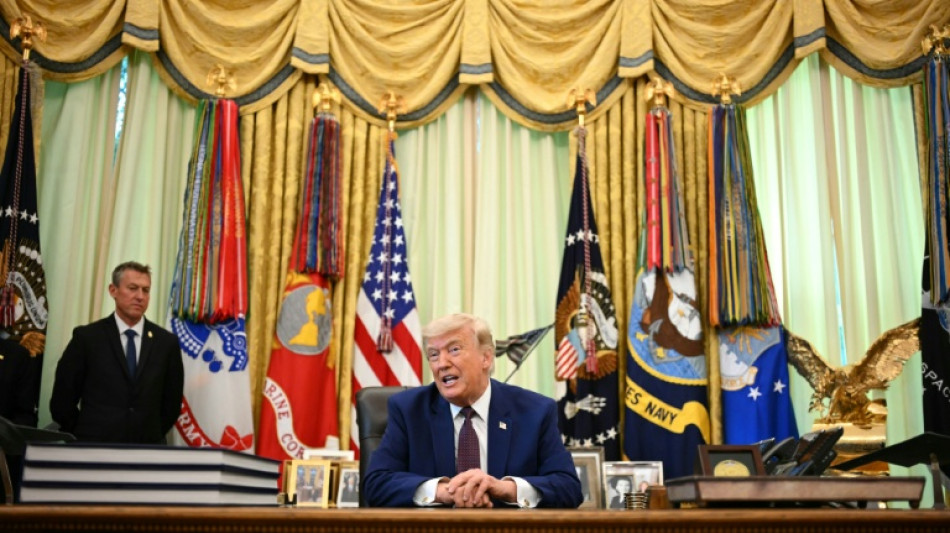
The US and Iran have sent divergent messages, with Tehran insisting on steep conditions for progress, even as President Donald Trump again voiced optimism, telling reporters a deal "could happen... over the weekend".
In his message, Khamenei said his country's enemies, after "facing a decisive blow", were now "experiencing a deeply meaningful and profound humiliation".
He went on to accuse them of seeking to "plant the seeds of doubt, despair, fear, mistrust and division" among the public, calling for unity to "neutralise their sinister plot".
Khamenei has not been seen in public since being wounded in strikes that killed his father and predecessor Ali Khamenei in the opening salvo of the US-Israeli bombing campaign on February 28.
Every June 4 since 1989, the elder Khamenei had delivered a speech at the commemoration of Ayatollah Ruhollah Khomeini's death.
This year, however, an empty chair bearing his portrait stood at the mausoleum, according to footage broadcast from the site.
- Rebuke to Trump -
Trump is under pressure to find a way out of the war, which has delivered a shock to markets and proven unpopular at home as midterm elections loom.
But in spite of a ceasefire that has largely held since April, progress towards a final deal has been punctured by sporadic episodes of violence -- including on Wednesday, when the US struck targets in Iran, which responded with an attack on Kuwait.
Four lawmakers from Trump's Republican party joined Democrats on Wednesday to vote 215-208 in favour of a resolution ordering the withdrawal of American troops from the Iran war.
"This is a loud and unambiguous message to Donald Trump on behalf of the American people: it's time to end his deeply unpopular and illegal war of choice in Iran," Democrats posted on X.
The resolution was largely symbolic, however, as the US president can veto it if it gains Senate approval.
At a congressional hearing, US Secretary of State Marco Rubio said Iran's highly enriched uranium stockpiles were at the centre of discussions with Tehran.
Washington insists Tehran must turn over its near-weapons-grade enriched uranium, agree to curb its nuclear activities and reopen Hormuz.
Iran, however, has long claimed a right to enrichment, and has also preconditioned a deal on halting the parallel conflict in Lebanon, where Israel is fighting the Tehran-backed armed group Hezbollah.
Iranian Foreign Minister Abbas Araghchi had said Wednesday that any Israeli attack on the Lebanese capital Beirut would trigger a "full-scale resumption" of the wider war.
- Lebanon violence -
In Washington, Israel and Lebanon agreed on Wednesday to implement a new ceasefire after two days of direct talks.
The agreement requires a "complete cessation" of fire by Hezbollah, and calls for "pilot zones" in which the Lebanese armed forces "will take exclusive control of the territory to the exclusion of all non-state actors".
Further talks were planned in the week of June 22, with a view toward reaching a "comprehensive agreement."
A previous truce was meant to have taken hold in Lebanon on April 17 but has never been observed, with the violence only escalating since.
Even after the announcement of the renewed ceasefire, Israel said there had been "a hostile aircraft infiltration" after air raid sirens sounded in the north, while Lebanese state media reported fresh Israeli drone strikes in the south.
Israel's defence minister, Israel Katz, characterised the agreement as granting his forces the "freedom of action, with American backing, to strike in Beirut in response to fire on Israeli communities".
Israel is staging its deepest ground offensive into Lebanon in two decades, and Katz said its troops would stay where they are "while continuing to dismantle terrorist infrastructure".
(P.Buthelezi--TPT)