
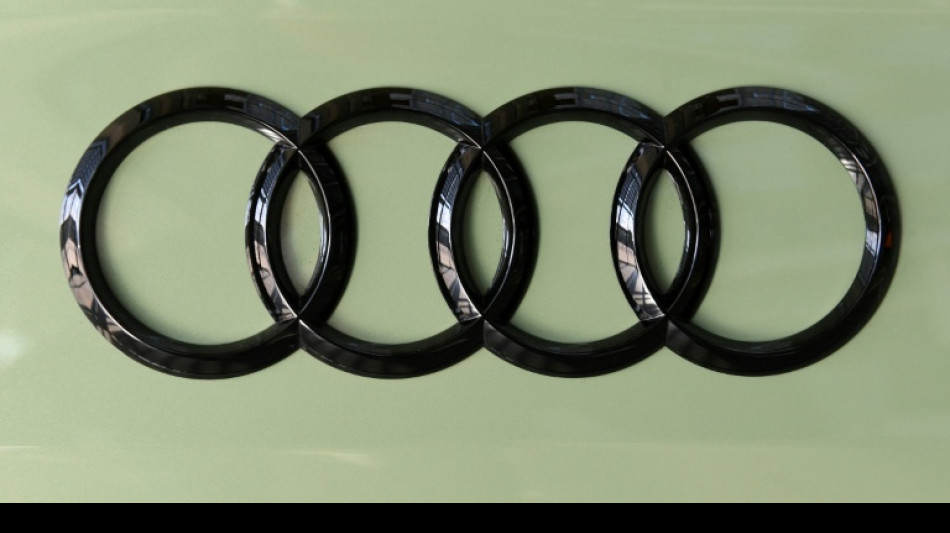
Carmaker Audi cuts outlook again on China, US woes / Photo: Christof STACHE - AFP
Premium German carmaker Audi on Friday cut its profit outlook for the second time this year, complicating turnaround efforts at its parent company Volkswagen.
Audi said it now expected a profit margin of three to five percent for the year, down from five to seven percent, as it comes under pressure from cutthroat competition in China as well as US tariffs.
The previous range was itself a cut from the six to eight percent forecast at the start of the year and is well below the margins the brand enjoyed in the 2010s.
Audi said its profit in the nine months to end-September fell 41 percent to 1.22 billion euros ($1.37 billion).
"Market and competitive conditions have become significantly more difficult in the third quarter," chief financial officer Juergen Rittersberger told journalists on a call.
"That all shows that we need to intensify measures and set clear priorities," he added.
Audi's troubles step up the pressure on the 10-brand Volkswagen Group, which plans to have cut 120,000 jobs globally across its brands by 2030.
Alongside Porsche, Audi's premium cars had traditionally brought in reliably fat margins for the wider group.
Audi has previously announced plans to cut 7,500 jobs and the long-term future of its Neckarsulm plant in southern Germany is uncertain.
However, the carmaker recently announced plans for a new factory to build SUVs in the US state of Georgia, as the American market has grown in importance for German carmakers being hammered in China.
Asked about any tariff sweeteners the US government might have offered to get the plant built, Rittersberger said that Audi was in talks with officials and that state authorities in Georgia would later publish what it had agreed with Audi.
Audi CEO Gernot Doellner announced the US investment at a rally with US President Donald Trump on Saturday, drawing harsh criticism from German unions and politicians.
Unlike its competitors BMW and Mercedes-Benz, Audi does not have its own plant in the United States, leaving it particularly exposed to Trump's tariffs.
"For us it is really a decisive financial step to go into the USA," Rittersberger said.
vbw/sr/js
(R.Mohlala--TPT)