
Doha Forum Links STEM Readiness to AI Era Global Competence
More than 200 educators and policymakers convened in Doha to address the evolving demands of higher education transition. The Building Bridges to Higher Education forum highlighted the need for students to develop not only academic skills but also global competence and adaptability to thrive in a technology-driven world.
Bridging the gap between secondary school and university has evolved beyond mere academic preparation, requiring a new generation to possess scientific knowledge, technological skills, and a global outlook capable of thriving in an economy reshaped by artificial intelligence.
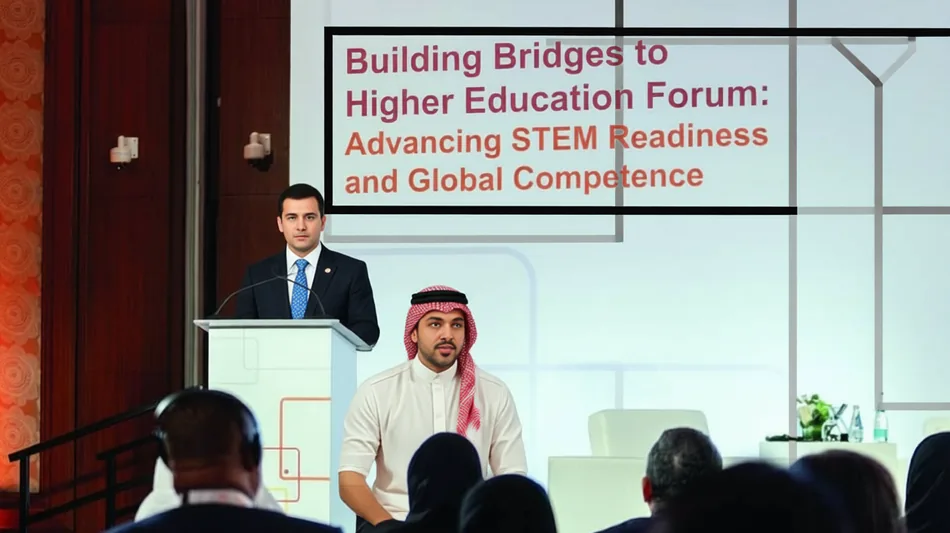
This challenge took center stage in Doha as more than 200 teachers, academic advisers, university officials, and education policymakers gathered for the Building Bridges to Higher Education: Advancing STEM Readiness and Global Competence Forum. The event explored strategies to help students make a confident transition to higher education while unlocking broader academic and career opportunities.
Organized by Weill Cornell Medicine-Qatar in partnership with the Academic Bridge Programme, and in collaboration with Qatar’s Ministry of Education and Higher Education (MOEHE) and Unesco, the forum examined three critical themes: scientific readiness in the AI era, the transition from secondary school to university, and global citizenship through education for sustainable development.
Through three panel discussions, local and international education specialists analyzed how closer collaboration between schools, universities, and policymakers could better prepare students for emerging opportunities in science, technology, engineering, and mathematics (STEM), with a particular focus on scientific and healthcare professions.
Dr. Rachid Bendriss, associate dean for Foundation, Student Outreach and Educational Development Programmes at Weill Cornell Medicine-Qatar and forum chair, described the transition to university as a defining milestone that requires coordinated guidance from educators and academic advisers. He stated that collaboration is essential to helping students navigate this journey with confidence, strengthen their scientific foundations, and acquire the skills necessary to succeed in an increasingly technology-driven world.
Dr. Saheim Khalaf al-Temimi, director of the Academic Bridge Programme, echoed this assessment, emphasizing that university readiness demands more than academic achievement. He noted that strong foundations, self-confidence, and a clear understanding of available opportunities are equally important. Al-Temimi said the partnership aims to translate educational dialogue into practical solutions that benefit both students and society.
Dr. Batool Hashem al-Sayed, director of the Higher Education Institutions Department at MOEHE, stressed that preparing students for the future is a continuous responsibility shared across educational institutions. She highlighted the importance of helping students make informed academic choices aligned with national development priorities and evolving global demands, particularly in STEM disciplines.
Salah Khaled, director of Unesco’s Regional Office for the Gulf States and Yemen, broadened the discussion beyond academic qualifications. He argued that tomorrow’s graduates must also possess the values, adaptability, and global awareness necessary to confront complex challenges. Khaled emphasized that stronger school-university partnerships could create more inclusive pathways into science, technology, engineering, arts, and mathematics (STEAM), while nurturing responsible global citizens committed to sustainable development.
The forum reinforced a central message: educational success depends increasingly on seamless collaboration between institutions rather than isolated efforts at individual stages of learning. For Qatar, the initiative underscored the importance of connecting classroom learning with higher education, scientific innovation, and workforce development, helping cultivate the skilled national talent needed for a knowledge-based economy.
(G.VanRooyen--TPT)