

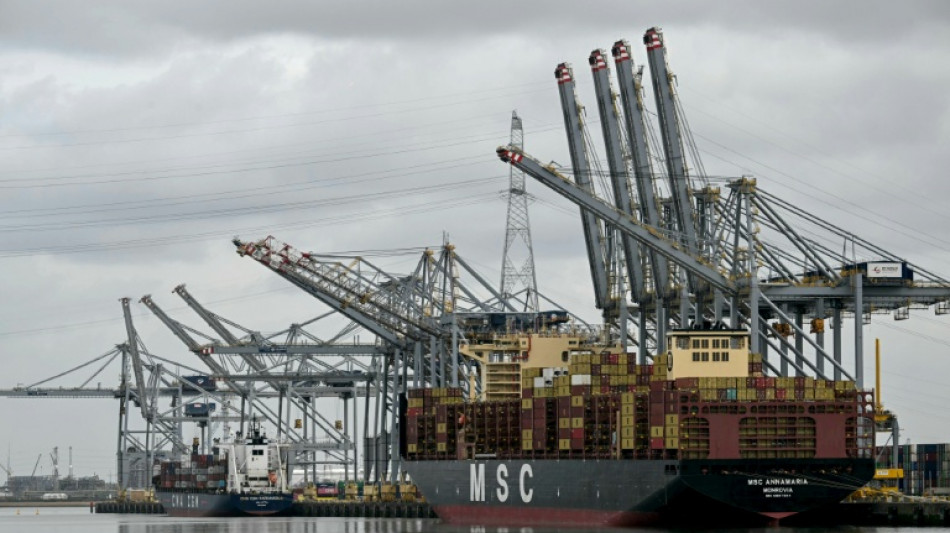
Antwerp port reopens to North Sea shipping after oil spill / Photo: NICOLAS TUCAT - AFP
Belgium's Antwerp port said Friday that it had reopened to North Sea shipping after an oil spill brought traffic to a near-halt in Europe's second-largest port.
The overnight spill occurred during a "bunkering operation" -- the process of filling a ship with fuel -- in the Deurganck Dock, used by some of the largest vessels in the world to load and unload goods in Antwerp.
The accident badly disrupted shipping as authorities raced to contain the risks of pollution and economic damage.
By early Friday afternoon the port said its main maritime access route via the Scheldt estuary had "been reopened to shipping" but that Deurdanck Dock "remains closed until further notice".
"Specialised vessels are actively engaged in cleaning up the oil," said a port statement, while working to "fully clear" the dock as well as several container terminals and locks affected by the spill.
"We are making every effort to safely and swiftly resume operations at these key locations and to minimise and resolve disruptions," Antwerp port said.
Belgian media reported that several dozen container and cargo ships had been affected by the traffic shutdown.
The port said that the source of the spill had been stopped, but that pollution had spread towards the Scheldt river with civil protection and maritime and coastal services closely monitoring the "potential impact on riverbanks and surrounding nature areas".
"The focus is on preventing further spread and on targeted clean-up of vulnerable zones," its latest statement said.
There was no official word on the scale of the spill, but local media VRT said the oil slick had spread over at least three kilometres -- almost two miles.
Local media reported that the spill occurred during the refuelling of the container ship MSC Denmark VI.
The ship's operator, MSC, confirmed the vessel was involved in the incident but declined to provide additional information.
"Our priority is safety," a spokeswoman for the company's Belgian office told AFP, adding that they were focused on safeguarding "the crew, the terminal, the nature".
- Key gateway -
The tidal Scheldt river estuary is the main maritime access route to Antwerp port, along with several narrower canals primarily used for inland navigation.
The port said it was "doing everything possible to minimise both operational and ecological damage".
The Pieter Coecke, a Belgian-flagged pollution control vessel, was operating in the area of the spill Friday, according to the Marine Traffic website.
Flemish environmental group Climaxi said ship refuelling operations were the main cause of oil spills in the region, often contaminating the local bird and amphibian populations.
The latest incident appeared to have impacted several natural reserves, including the Doelpolder wetlands, that are key bird breeding grounds, it said.
Larger than 22,000 football fields, Antwerp port is a key gateway for goods coming into Europe from the United States, China and elsewhere.
Europe's largest after Rotterdam in the Netherlands, the port handles transit each year of around 267 million tonnes of goods and is used by around 20,000 seagoing vessels and 50,000 inland vessels, according to its website.
(T.Byrne--TPT)