
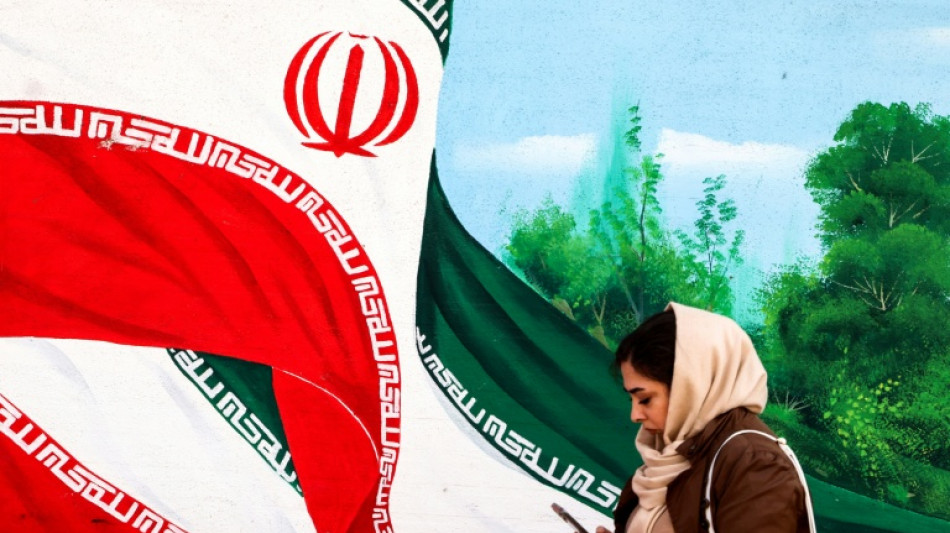
Iran would react 'ferociously' to any US attack, warns of regional conflict / Photo: ATTA KENARE - AFP
Iran vowed on Monday to retaliate "ferociously" against any attack by the United States and reiterated warnings of a regional conflagration in response to President Donald Trump's threat of limited strikes.
The bellicose rhetoric from Tehran and Washington came as both sides worked to reach a deal on Iran's contentious nuclear programme in indirect talks due to restart in Switzerland on Thursday.
As Iran faces US pressure backed by a build-up of military force in the Middle East, university students have started the new semester with anti-government protests, reviving slogans from nationwide demonstrations that peaked in January and were met with a deadly crackdown.
Trump last week said he was weighing a limited strike if Iran did not cut a deal, but Tehran's foreign ministry reiterated Monday that any strike, even limited, "would be regarded as an act of aggression".
"And any state would react to an act of aggression... ferociously, so that's what we would do," ministry spokesman Esmaeil Baqaei said at a briefing in Tehran.
Iran has said it would be ready to deliver a draft proposal for an agreement on its nuclear programme to mediators in coming days, with Trump saying on Thursday that Tehran had at most 15 days to make a deal.
Iran insists its nuclear programme is for civilian use, but the West believes it is aimed at building an atomic bomb.
While Iran has taken anything beyond the nuclear issue off the negotiating table, Washington also wants to discuss Tehran's missiles and its support for militant groups in the region.
The two countries concluded a second round of indirect talks in Switzerland last week under Omani mediation and were due to continue on Thursday.
Iranian deputy foreign minister Kazem Gharibabadi said the talks were "a new window of opportunity", but warned of the risk of a regional conflict if his country was attacked.
"The consequences of any renewed aggression wouldn't remain confined to one country and responsibility would rest with those who initiate or support such actions," Gharibabadi said at the Conference on Disarmament in Geneva, calling on other countries to "take meaningful steps to prevent further escalation".
The risk of conflict has caused mounting fear in Iran and spurred other countries to take precautionary measures.
India on Monday joined Sweden, Serbia, Poland and Australia in calling for its citizens to leave Iran.
The United States, meanwhile, ordered non-emergency personnel to leave its embassy in Lebanon, home to the Shiite militia Hezbollah, which maintains close ties to Iran.
- 'Diplomatic solution' -
In Israel, which went to war with Iran last year, Prime Minister Benjamin Netanyahu told parliament the country was facing "complex and challenging days" due to the tensions.
Netanyahu, who has long advocated a hard line on Iran's clerical state, also reiterated a warning to its leadership "that if they make the gravest mistake in their history and attack the State of Israel, we will respond with a force they cannot even imagine".
Israel had launched its war last June just as Iran was preparing for another round of talks with the US, which ultimately joined the conflict.
In an interview with Fox News broadcast over the weekend, US negotiator Steve Witkoff said Trump was wondering why Iran has not "capitulated" in the face of Washington's military threats and force deployment.
Baqaei responded Monday by saying that Iranians had never capitulated at any point in their history.
The European Union called for a diplomatic solution ahead of the Geneva talks.
"It is true that Iran is at its weakest point that they have been. We should be really using this time to find a diplomatic solution," EU foreign policy chief Kaja Kallas said.
- Flags burned -
The protests sparked in December over economic pains in the sanctions-hit country grew into the most significant challenge to the authorities in years.
They were put down by security forces as they peaked on January 8 and 9 with violence that left thousands dead. The US-based Human Rights Activists News Agency (HRANA) recorded more than 7,000 killings, while warning the toll is likely far higher.
Authorities acknowledge more than 3,000 deaths, but say the violence was caused by "terrorist acts" fuelled by the United States and Israel.
Protests sprung up again over the weekend at universities.
On Monday videos geolocated by AFP and circulated on social media showed students at a university in Tehran burning the Iranian flag -- adopted after the 1979 Islamic revolution that toppled the monarchy -- and chanting "down with the Islamic republic".
University rallies were held by both pro- and anti-government groups to commemorate those killed in the protest wave, with videos also showing people burning Israeli and US flags as well as scuffles breaking out between groups.
(P.Derckson--TPT)