
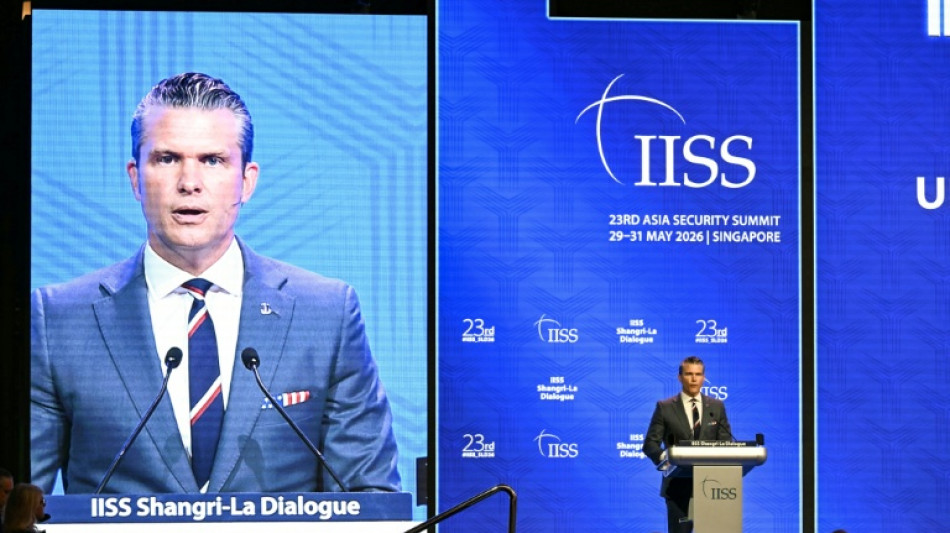
US says capable of resuming war with Iran as deal remains elusive / Photo: JAM STA ROSA - AFP
The United States warned on Saturday it was "more than capable" of resuming its war with Iran after President Donald Trump said any peace deal must adhere to his red lines, including Tehran never being able to develop nuclear weapons.
The White House had signaled Trump was close to a decision on a potential deal, though Tehran denied there was a final agreement on ending the conflict.
US sources had told AFP the deal was waiting on Trump's sign-off, but he made no decision after a White House Situation Room meeting on Friday.
Pentagon chief Pete Hegseth, while attending a defense summit in Singapore, said on Saturday that Washington was "more than capable" of restarting the war if necessary, adding "our stockpiles are more than suited for that."
US Central Command (CENTCOM) posted on X that American forces "remain present and vigilant across the region."
Despite a ceasefire that has largely held since April, there have been occasional flare-ups.
Iran's IRNA state news agency said air defenses shot down a drone "belonging to the US-Zionist aggressor enemy" on Saturday, citing the army.
Nevertheless diplomacy has continued, including to stop parallel fighting in Lebanon, which Iran has insisted be part of any deal to end the war and where Israeli forces have advanced further even as military delegations from both nations met at the Pentagon Friday.
Trump said his priorities for any deal included Iran agreeing to never develop nuclear weapons and the re-opening of the blockaded Strait of Hormuz.
"President Trump will only make a deal that is good for America and satisfies his red lines," a White House official told AFP, adding: "Iran can never possess a nuclear weapon."
- Competing conditions -
Iranian foreign ministry spokesman Esmaeil Baqaei pushed back on Trump's conditions, saying the Islamic republic "said goodbye to the language of 'must' 47 years ago."
Exchanges of messages were continuing, he added, but "no final agreement has been reached."
In his social media post, Trump said Tehran would remove mines from the Strait of Hormuz and end its closure of the waterway with "no tolls," while the US would lift its blockade of Iranian ports.
The two countries would also coordinate on removing and destroying Iran's enriched uranium, he said, adding that "no money will be exchanged, until further notice."
Iran's Fars news agency, however, cited sources as saying Tehran was demanding "the immediate release of $12 billion" before moving to the next phase of negotiations.
On the toll-free reopening of Hormuz, the sources said "no such clause appears in the text of the agreement," while Trump's comment on destroying Iran's nuclear material "is fundamentally baseless."
Iran's ISNA news agency on Saturday cited lawmaker Alireza Salimi as saying a plan "to implement Iran's management and sovereignty over the Strait of Hormuz will soon be approved by parliament."
Meanwhile, Iran's Tasnim news agency said the US blockade in the strait remained in place and its ships "are receiving warnings from CENTCOM to stop and not cross the blockade line."
Turkish Foreign Minister Hakan Fidan said in an interview with Nikkei Asia that the closure of Hormuz was "putting too much pressure on both" the US and Iran, while "the international impact -- including on energy security, food security, and rising prices -- is immense."
"This has become a situation that takes priority over the nuclear files," he added.
- Fighting in Lebanon -
Fighting has continued unabated on the war's Lebanese front, in spite of a separate ceasefire declared there.
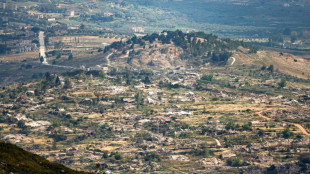
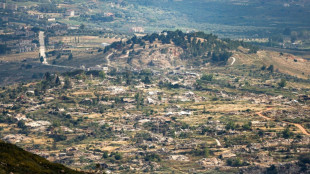
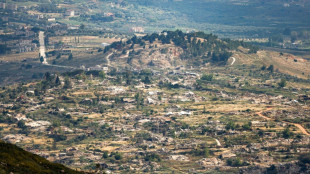
Israel's military issued evacuation warnings for more villages south Lebanon on Saturday, a day after Prime Minister Benjamin Netanyahu said Israeli forces had pushed more than 30 kilometres (20 miles) into the country.
Lebanese Prime Minister Nawaf Salam accused Israel of pursuing a "scorched-earth policy and collective punishment" in his country's south, and called for "a swift and real ceasefire."
A truce between Israel and Hezbollah began on April 17 but has never been observed, with both sides accusing each other of violating it.
In early March, Tehran-backed Hezbollah launched rockets at Israel over the US-Israeli killing of Iran's supreme leader, prompting Israeli strikes across Lebanon and a ground invasion.
Israel and Lebanon began direct talks in April, with a fourth round expected next week.
burs-smw/rh
(L.Fourie--TPT)