
In devastated south Lebanon village, residents count on army deployment / Photo: Joseph EID - AFP
As Lebanon's army deploys in the southern village of Zawtar al-Gharbiya, Hassan Sbeih is among those reassured by the troops and hoping the move will soon extend to areas still occupied by Israel.
Last week, the Lebanese military began deploying to the devastated village, one of the first "pilot zones" under a framework agreement reached between Israel and Lebanon in June.
"I think the army has proved its success because people have started to return and they are comfortable with its presence in the village," Sbeih, 62, said as he waited at a bakery there.
"There's been no friction with the locals. On the contrary, they've been relaxed," said Sbeih, who is from Zawtar al-Gharbiya but whose home is in the neighbouring village where Israeli soldiers are still present.
"We can't reach our homes... We come here, breathe in the air of our village, then leave," he told AFP.
Israeli troops had not been stationed inside Zawtar al-Gharbiya but had been carrying out incursions from its outskirts, before withdrawing from that area last week.
The Iran-backed Hezbollah group drew Lebanon into the Middle East war with rocket fire at Israel in support of Tehran on March 2. Israel responded with major airstrikes and a ground invasion that Lebanese authorities say have killed more than 4,300 people.
A Lebanese soldier in Zawtar al-Gharbiya, speaking on condition of anonymity as he was not authorised to brief the media, said the army had seized weapons and dismantled explosive devices and other military equipment since deploying there.
- 'Safe' -
Under the US-sponsored framework agreement, Lebanon's army is to disarm Hezbollah in "pilot zones" after Israeli troops withdraw, a test intended to pave the way for the gradual Israeli withdrawal from other parts of south Lebanon.
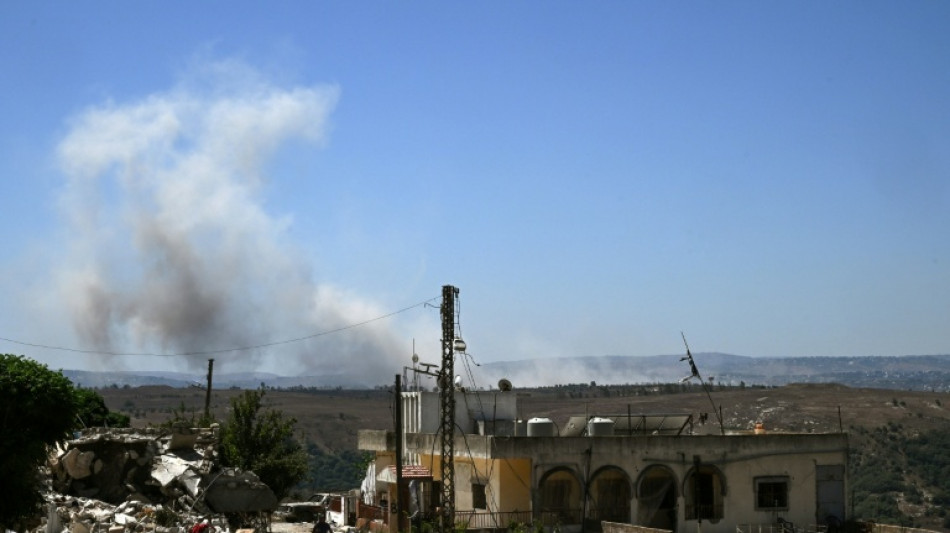
Destruction was everywhere in Zawtar al-Gharbiya, where mayor Abed Ezzeddine said three quarters of the buildings had been destroyed and there was no electricity or running water.
An AFP team in the village saw Israeli military vehicles operating on a nearby hill.
In the main square, Lebanese soldiers used heavy machinery to remove rubble as drones buzzed overhead.
Explosions rang out from nearby villages where smoke rose, as Lebanon says Israeli troops continue to detonate or otherwise demolish buildings in areas under their control.
"We feel safe with the army presence... the important thing is that it stays here," said Ayad Shoucair, 65, who was in the square with friends.
Local residents arrived in the village to inspect their homes, while others cleaned up the dust and debris from their damaged properties.
After deploying last week, the Lebanese army initially prevented residents from entering Zawtar al-Gharbiya while it carried out search and sweep operations, before allowing locals to check their homes in recent days.
Israeli tank tracks were still visible on the ground, while Hebrew writing was seen on the wall of one home.
- 'Relative calm' -
The deployment is a major test for the Lebanese state, with experts expressing doubt over authorities' ability to disarm Hezbollah, which opposes the deal with Israel and refuses to surrender its weapons.
Military expert Fadi Daoud told AFP that the Lebanese army's success in Zawtar al-Gharbiya was based on a "particular equation: a small area, relative calm, strong political symbolism and direct US pressure".
But the retired Lebanese army general said it would be tough to replicate "in broader and more complex areas", particularly if Hezbollah sticks to its stance.
The biggest challenge will be when the army receives "information on tunnels or weapons depots" belonging to the group and will have to decide to go in even if Hezbollah objects, he added, noting the military lacks clear legal authorisation to inspect private properties.
After months away from Zawtar al-Gharbiya, Mahmoud Turkiye, 70, was also sceptical.
"May God help the army, it doesn't have the authority to do anything," he told AFP.
However, its presence "boosts people's morale", he added, leaning on a cane.
(O.Mofokeng--TPT)